Skip to content
Mt. Fuji — Japan's highest mountain seen from its foothills: five lakes, spring-fed shrines and falls, and golf courses that face the summit, within two hours of Tokyo.

Photo: Marion & Christoph Aistleitner · CC0 · Wikimedia Commons

Japan

Shizuoka & Yamanashi

Mt. Fuji

Japan's highest mountain seen from its foothills: five lakes, spring-fed shrines and falls, and golf courses that face the summit, within two hours of Tokyo.

Fuji-view golfFuji Five LakesChureito PagodaHongu Sengen TaishaShiraito FallsFujinomiya yakisoba & hotoDay trip from Tokyo
Plan a trip to Mt. Fuji

Why Mt. Fuji

At 3,776 m, Mt. Fuji is Japan's highest mountain, a lone volcano on the border of Shizuoka and Yamanashi that last erupted in 1707. Pilgrims have climbed it for centuries, and Hokusai's and Hiroshige's print series made it an image known far beyond Japan. That is why UNESCO listed it in 2013 as a cultural site, 'Fujisan, sacred place and source of artistic inspiration', with 25 components ranging from the summit and its trails to the shrines, lakes, springs and waterfalls around the base.

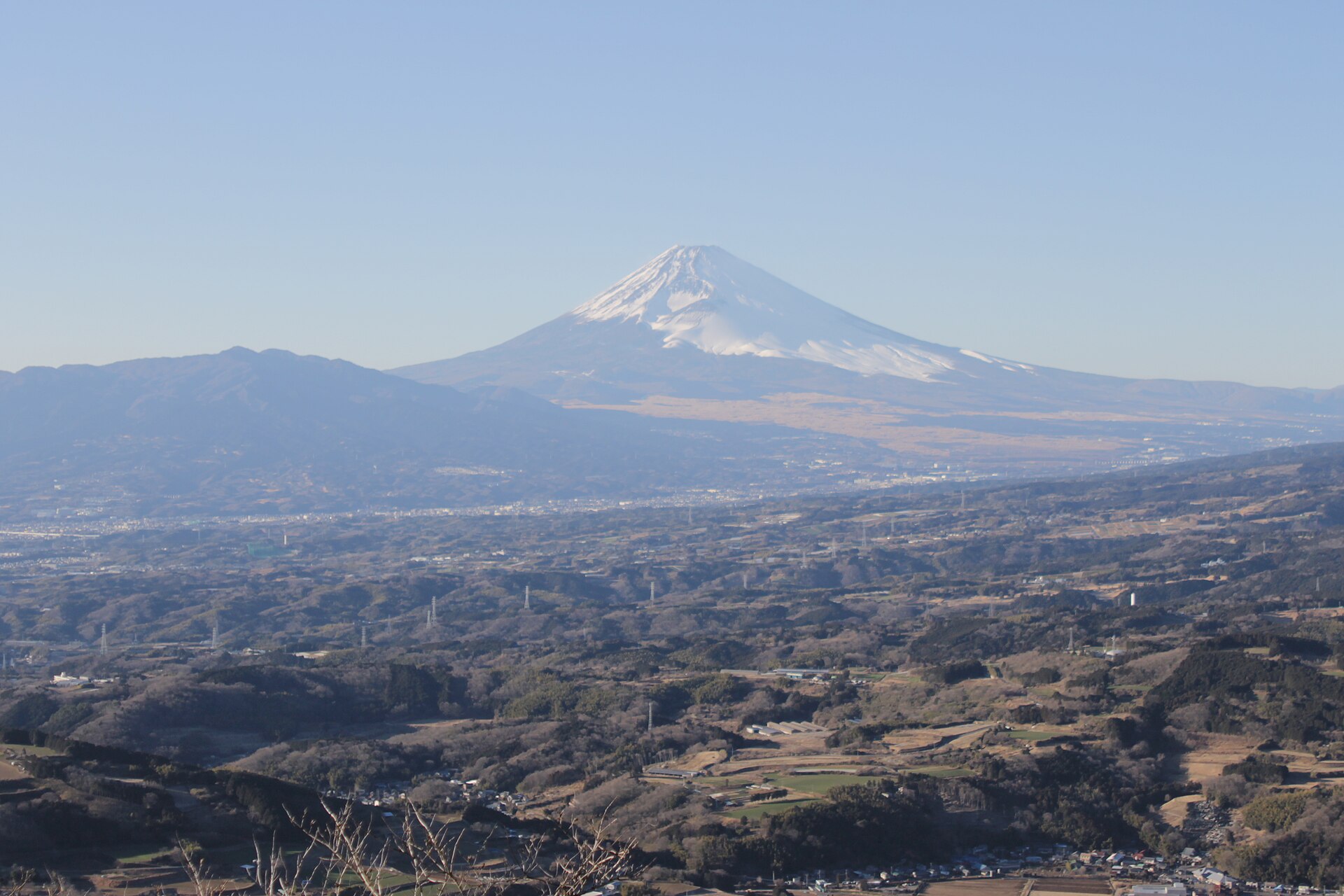
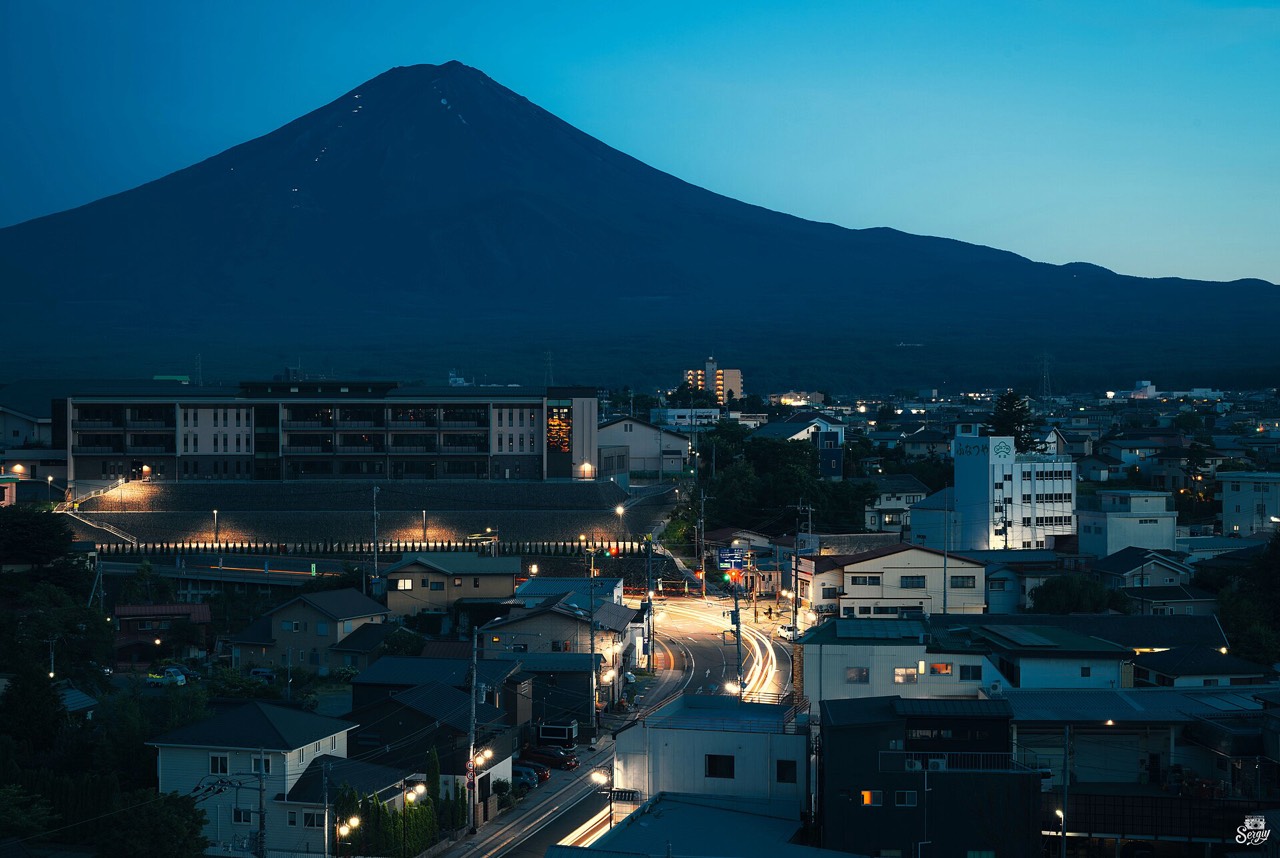
Most visitors see the mountain from below, and so do golfers. The courses Dokumo uses are in the foothills on the Shizuoka side, with the summit in view from the fairways, roughly one and a half to two hours from central Tokyo by car. That is close enough for a day trip with a hotel pick-up, or for the Fuji-view round in a Tokyo package. North of the mountain are the Five Lakes and the Chureito Pagoda; to the south and west, the Hongu Sengen shrine, Shiraito Falls and Fujinomiya's yakisoba.

Good for

  • A Fuji-view round as a day trip from Tokyo
  • Seeing Mt. Fuji up close without climbing it
  • Shrines, waterfalls and spring-fed ponds on a self-drive day
  • A Fuji-view round inside a Tokyo golf package

The map

Where you'll be in Mt. Fuji

The city's wards, the towns around them and every hotel and golf course our trips use. Tap a ward or a pin.

FujinomiyaFuji CitySusonoGotembaOyamaFujiyoshidaFujikawaguchikoNarusawaYamanakakoOshinoNishikatsuraNumazuNagaizumiShimizu TownMishimaHakoneMinobuNanbuShimizu WardMt. Fuji 3,776 mKawaguchiko StationGotemba StationMishima StationShin-Fuji StationAsagiri Kogen
Golf courseStationPeakTowns around Mt. Fuji

Boundaries: MLIT National Land Numerical Information (administrative areas), simplified by Dokumo.

6 places

What to see in Mt. Fuji

The handful that shape a first visit — each with the tip we give every traveler.

Lake Kawaguchi & the Five Lakes

Photo: Alpsdake · CC BY-SA 4.0 · Wikimedia Commons

Nature

Lake Kawaguchi & the Five Lakes 河口湖・富士五湖

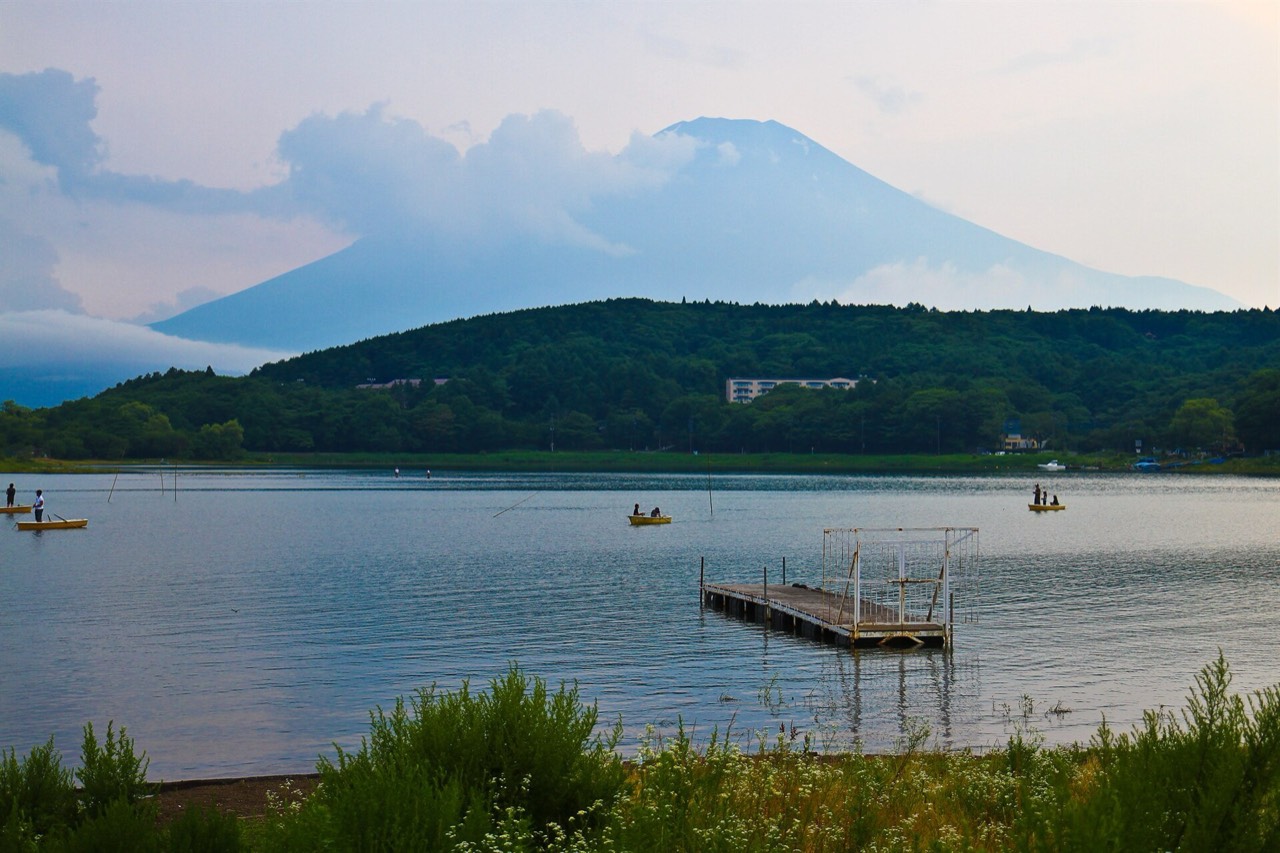
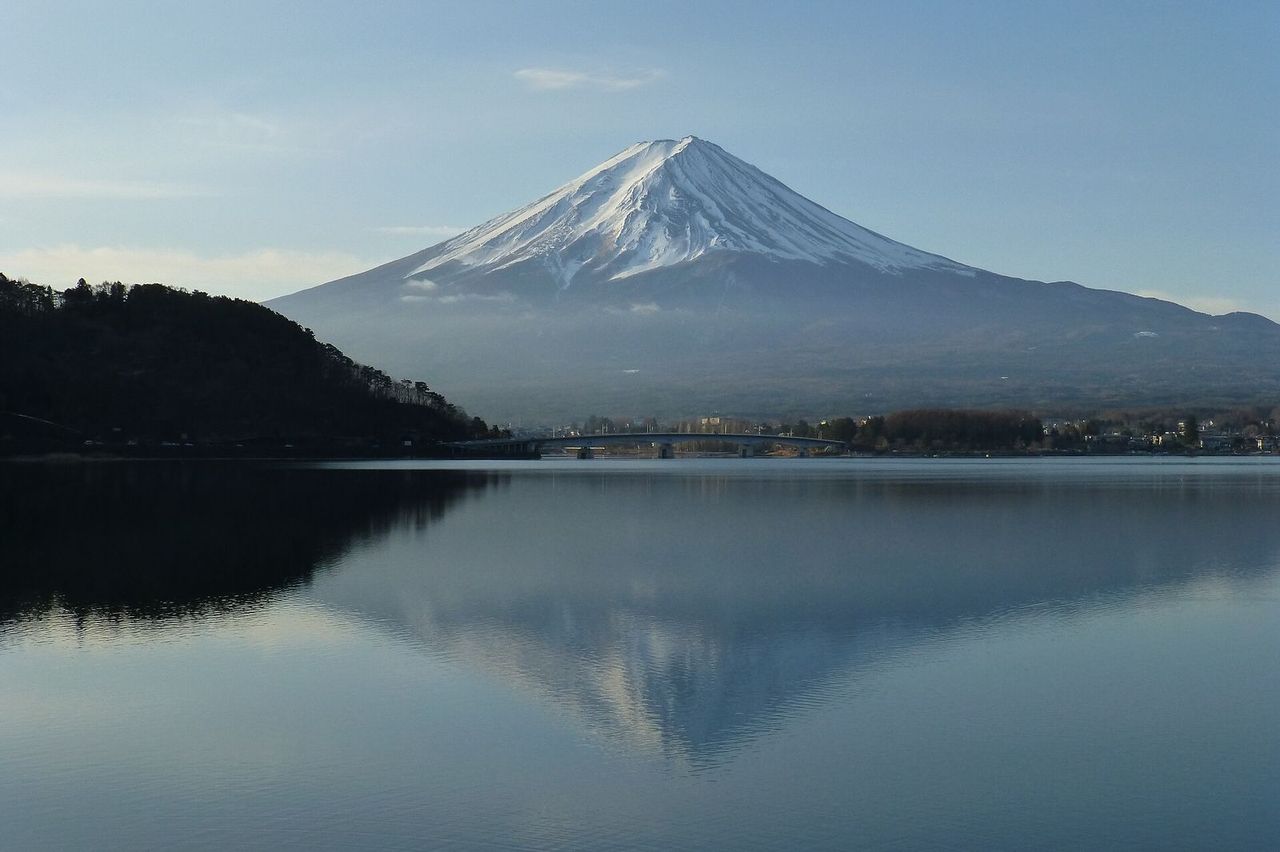
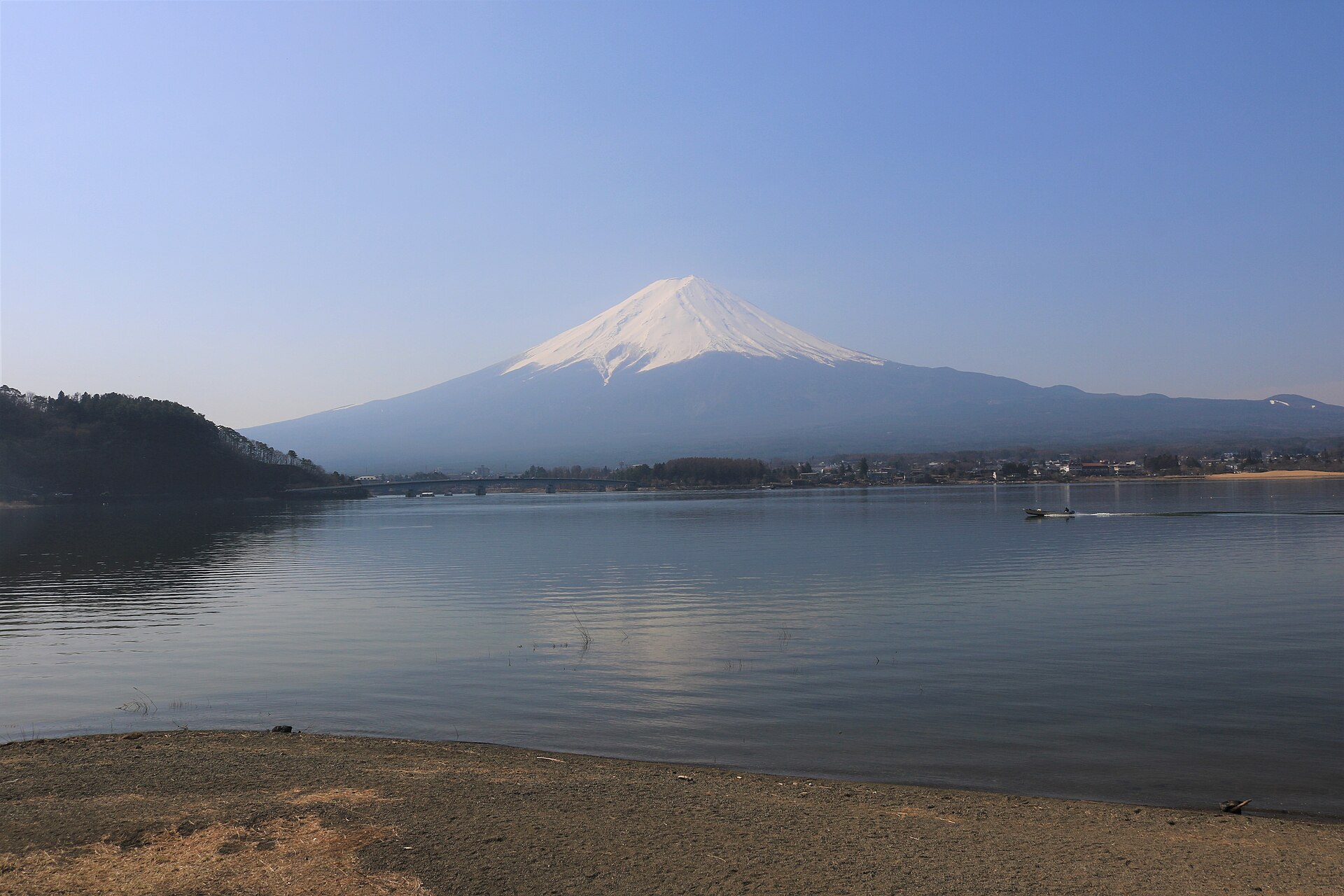
Lava flows from Fuji dammed the valleys on its north side and left five lakes, all part of the World Heritage listing. Lake Yamanaka is the largest and highest, at 980 m; Motosu is the deepest, at 121.6 m; Sai and Shoji are what remained of a single lake after the lava of 864 filled most of it. Kawaguchi is the lake with a town: Kawaguchiko Station, lakeside ryokan, and a north shore where Fuji rises straight across the water. In November the old maples of the Momiji Corridor on that shore turn red.

Our tip — The Mt. Fuji Panoramic Ropeway, a 15-minute walk from Kawaguchiko Station, climbs in three minutes to a 1,075 m viewpoint over the lake and the mountain.
Temple

Chureito Pagoda 新倉山浅間公園・忠霊塔

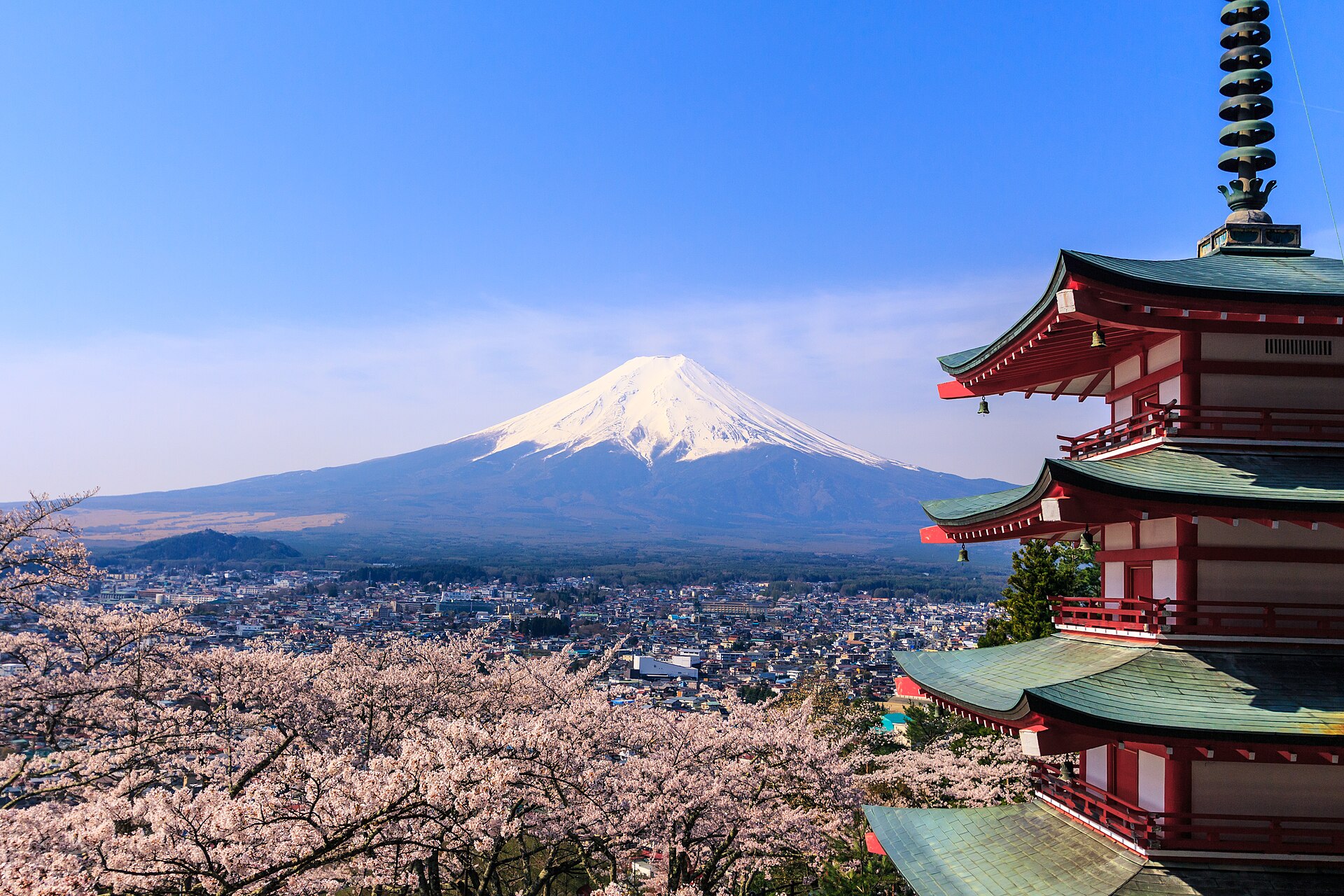
The five-storey pagoda on the hillside above Fujiyoshida is a memorial to the city's war dead, built in the early 1960s in Arakurayama Sengen Park. From the viewing deck above it, the red pagoda and the whole cone of Fuji line up in one frame, one of the best-known views in Japan. About 650 cherry trees bloom around it in early to mid-April.

Our tip — It's 398 steps up from the shrine at the bottom, or a gentler path alongside; allow about 25 minutes on foot from Shimoyoshida Station, and come early in the day, when the mountain is most often clear.

Fujisan Hongu Sengen Taisha

Photo: Saigen Jiro · CC0 · Wikimedia Commons

Temple

Fujisan Hongu Sengen Taisha 富士山本宮浅間大社

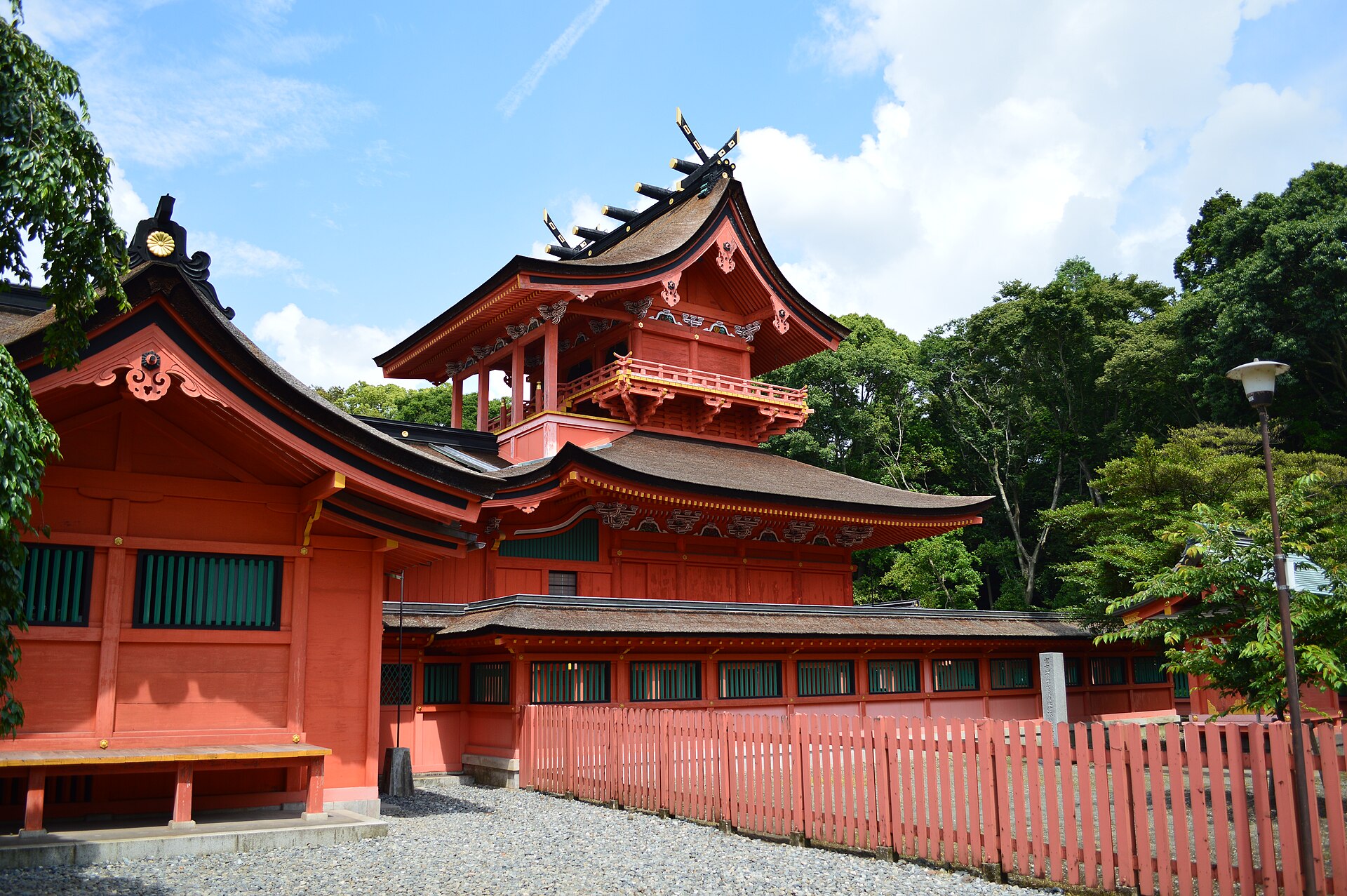
The head shrine of Japan's roughly 1,300 Sengen shrines, which worship Fuji itself as a deity. Tokugawa Ieyasu had the main hall built in 1604 in a two-storey form found nowhere else, now an Important Cultural Property. Beside it, Fuji snowmelt wells up into the Wakutama Pond, a Special Natural Monument. The shrine's precinct also takes in the mountain above the eighth station, where its Okumiya stands on the summit.

Our tip — The Mt. Fuji World Heritage Centre, Shizuoka, Shigeru Ban's inverted-cone building, is a few minutes' walk away; its spiral ramp ends at a window facing the real peak.

Shiraito Falls

Photo: Alpsdake · CC BY-SA 4.0 · Wikimedia Commons

Nature

Shiraito Falls 白糸ノ滝

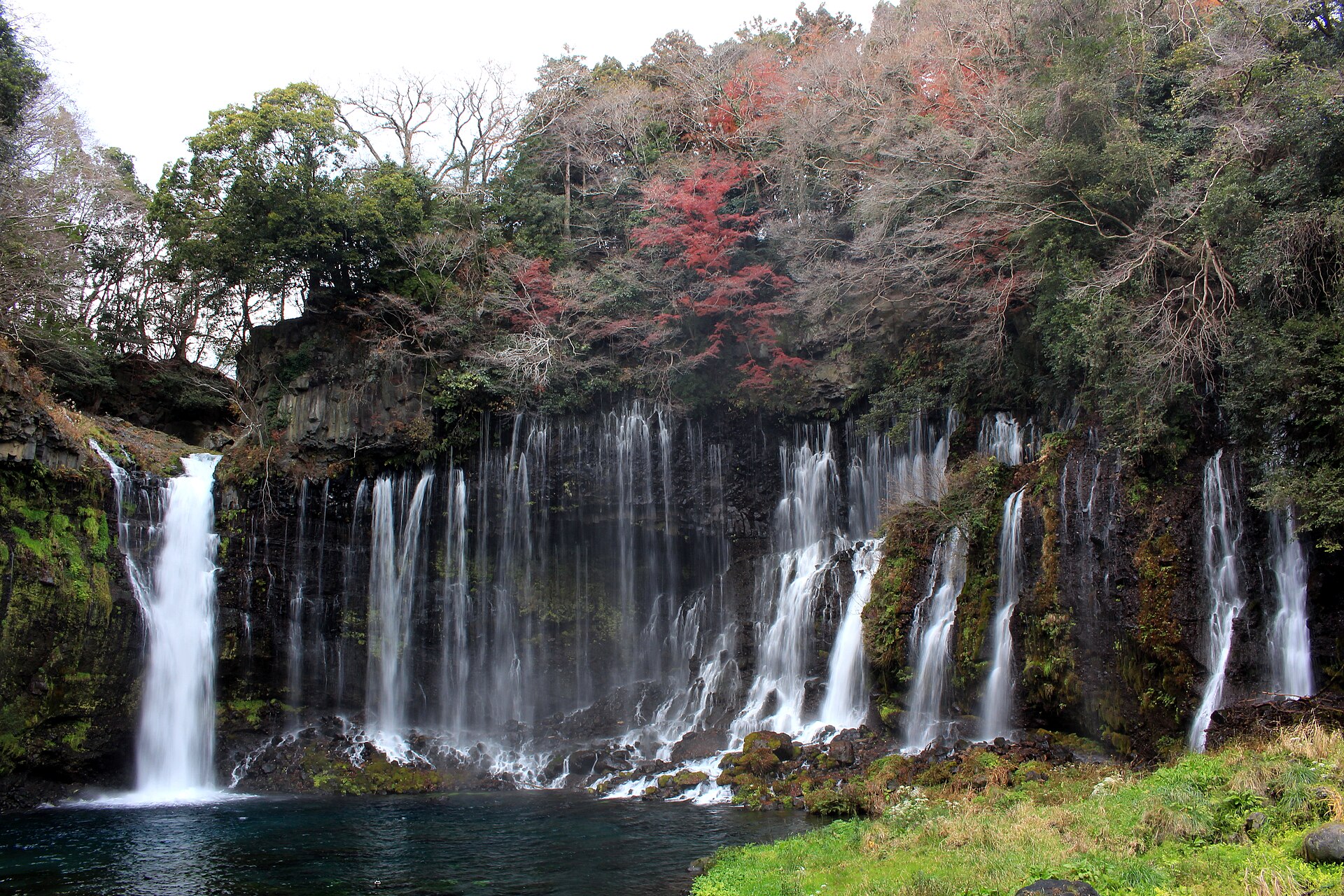
Hundreds of threads of water pour from a curved cliff 20 m high and 150 m wide. It is Fuji's snowmelt, which seeps down through the porous younger lava and comes out where it meets an impermeable older layer. The falls are a national Place of Scenic Beauty and Natural Monument and part of the World Heritage site, and the single, louder Otodome Falls is next door.

Our tip — It's about 30 minutes by bus from JR Fujinomiya Station and a few minutes' drive from Nishi Fuji Golf Club, an easy stop after a round if you're driving yourself.

Fuji-view golf

Photo: 国土地理院 · Attribution · Wikimedia Commons

Golf

Fuji-view golf 富士山を望むゴルフ場

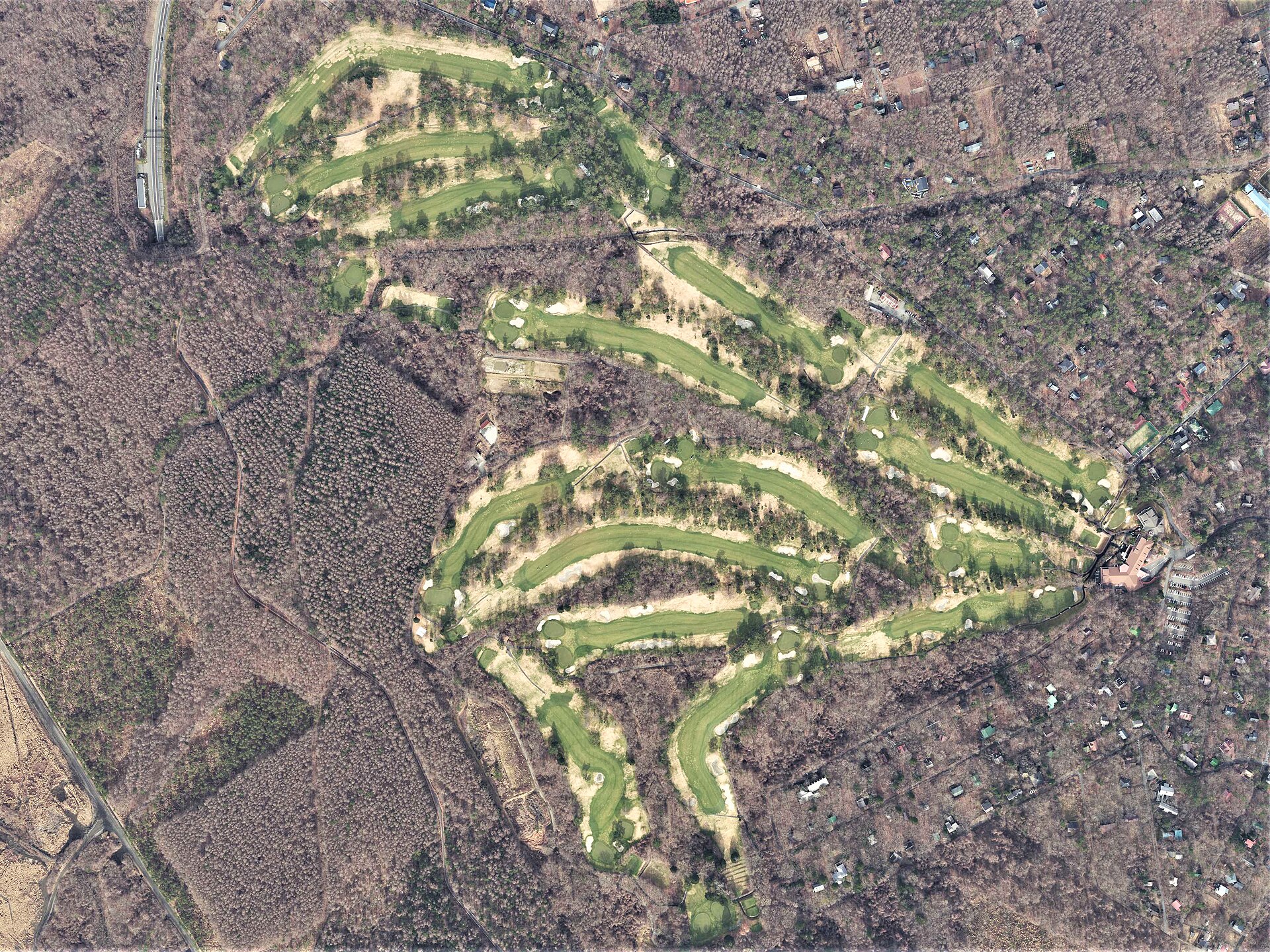
The courses Dokumo uses are in the Shizuoka foothills, where the mountain is in view from the fairways. Jurigi Country Club (1973) plays at about 1,000 m on the south slope, with Fuji to the north and Suruga Bay to the south. Fuji-no-Mori Golf Club, known for broad fairways, is at Subashiri, about 10 minutes from the Shin-Gotemba interchange. Nishi Fuji Golf Club, an 18-hole Shunsuke Kato design at about 600 m, lies near Shiraito Falls, and River Fuji Country Club's 27 holes by Kokichi Yasuda look up at the mountain from the hills west of the Fuji River.

Our tip — Dokumo's Fuji day trip collects you at your Tokyo hotel early and takes roughly 1½ to 2 hours each way, so you tee off in the morning, when Fuji is most often clear. Snow can close the higher courses for a day or two between December and March.

The Fuji foothill table

Photo: Ocdp · CC0 · Wikimedia Commons

Food

The Fuji foothill table 富士宮やきそば・吉田のうどん・ほうとう

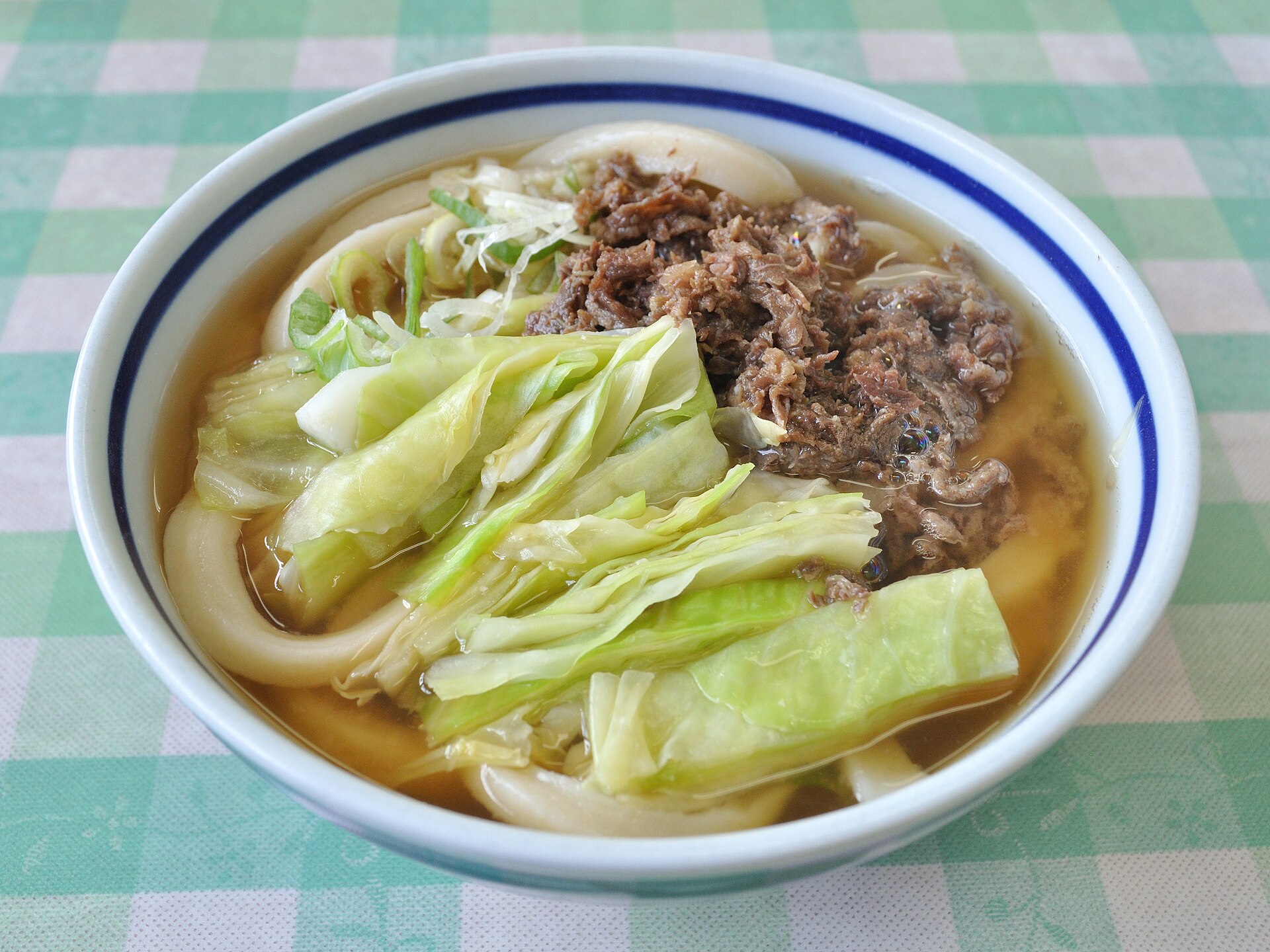
Fujinomiya yakisoba won the first two B-1 Grand Prix for local food, in 2006 and 2007: firm steamed noodles fried with nikukasu, the crisp bits left after rendering lard, and finished with sardine dashi powder. On the Yamanashi side, Fujiyoshida's Yoshida udon is known for being very firm and comes topped with boiled cabbage and sweet-simmered horse meat, while hoto, wide flat noodles simmered raw in miso with pumpkin, is the dish for a cold evening by the lakes.

Our tip — Most Yoshida udon shops open only for lunch, roughly 11:00 to 14:00, and close when the noodles run out. In Fujinomiya, Omiya Yokocho beside the Hongu Sengen shrine has a yakisoba counter.

Trips

Trips based in Mt. Fuji

All Trips

Getting there

  • Tokyo by carThe Tomei Expressway reaches Gotemba (84 km from the Tokyo interchange) and the Chuo Expressway reaches Kawaguchiko (94 km from Takaido), each about an hour without traffic. Dokumo's Fuji day trip includes the round-trip transfer from your Tokyo hotel.
  • Tokyo by trainThe Fuji Excursion limited express runs from Shinjuku to Kawaguchiko in about 2 hours, several times a day; Odakyu's Fujisan limited express reaches Gotemba from Shinjuku in about 1 h 30 to 1 h 45. For the Shizuoka side, the Tokaido Shinkansen takes about 45 minutes to Mishima (Hikari) or about 1 h 10 to Shin-Fuji (Kodama).
  • Tokyo by busHighway buses from Busta Shinjuku reach Kawaguchiko Station in about 1 h 45 and run through the day; some continue to Lake Yamanaka and, in season, to the Fifth Station.
  • Haneda & NaritaDirect buses (book ahead) run from Haneda to Kawaguchiko in about 2 h 50 and, via Yokohama, to Gotemba in about 2 h 20. From Narita, the Kawaguchiko bus takes about 3 h 40.
  • Mt. Fuji Shizuoka AirportDomestic flights plus a handful of routes to Korea and other Asian cities. There is no rail link; Fujinomiya is about 1 h 20 by car via the Shin-Tomei Expressway.
  • United StatesThere are no flights into the Fuji area from the US. Fly into Haneda or Narita and come on by car, bus or train, or join the Fuji day trip from your Tokyo hotel.

When to go

  • December – FebruaryThe clearest months, with the mountain fully snow-capped: Lake Kawaguchi averages about 210 hours of sunshine in January against about 120 in June. Snow can close the higher courses for a day or two after a storm, and Dokumo's Fuji day trip pauses over the winter, but several Tokyo packages keep their Fuji-view round.
  • March – MayDokumo's Fuji day trip returns in spring, and the Chureito Pagoda's cherry trees bloom in early to mid-April. Cloud cover builds as spring goes on, so the mountain hides more often.
  • June – SeptemberThe rainy season and summer cloud often hide the peak. The climbing trails open from early or mid-July to 10 September, and the lakes run cooler than Tokyo: August highs average 28°C at Lake Kawaguchi against 31°C in Tokyo.
  • October – NovemberClear days return and the first snow of the season usually caps the summit in October. It is prime golf weather, and the Momiji Corridor maples on Lake Kawaguchi turn in the first half of November.

Beyond Tokyo

Add Mt. Fuji to your Japan

Tell us your dates and who is coming — a designer replies with a plan that fits Tokyo and Mt. Fuji into one trip.

Request a quote